
Spartan King who fought Pyrrhus: Delving into the army methods and management of Spartan kings who clashed with the formidable Pyrrhus, this exploration unveils the intricacies of historic warfare. This evaluation delves into the battles, ways, and lasting affect on Spartan society, evaluating Spartan management to Pyrrhus’s progressive methods.
From the political panorama of the period to the particular army ways employed, this in-depth examine sheds mild on the pivotal conflicts between these two formidable forces. The historic context, strategic approaches, and eventual outcomes are examined, offering a complete understanding of the battles and their lasting legacy.
King Pyrrhus’s Opponents
The conflicts between King Pyrrhus and the Spartans stand as a compelling case examine in historic warfare. Pyrrhus, a formidable basic identified for his tactical brilliance and progressive army methods, confronted a sequence of Spartan kings who, regardless of their challenges, put up a fierce resistance. This era reveals essential insights into the evolution of army ways and the management qualities required to face up to a strong adversary.
Spartan Kings Confronting Pyrrhus
The Spartans who engaged Pyrrhus in battle weren’t a monolithic entity. Every king introduced distinctive strengths and weaknesses to the sector. Understanding their particular person management types, army experiences, and the historic circumstances surrounding their confrontations offers a extra nuanced perspective on the Pyrrhic Wars.
King Leonidas, a Spartan chief famend for his bravery, confronted Pyrrhus, a formidable basic. The Spartan’s unwavering resolve, nonetheless, contrasted with the palpable concern, the sensation of trembling in my boots , that probably gripped many troopers on either side. The legendary Spartan king, regardless of the extraordinary strain, fought fiercely in opposition to Pyrrhus’s military, showcasing the Spartan spirit.
Strategic Navy Approaches of Spartan Kings
Spartan kings, steeped within the traditions of their militaristic society, usually employed a defensive technique, leveraging their well-trained hoplites and fortified positions. Their major focus was on sustaining a powerful defensive position, utilizing their superior self-discipline and formation to face up to Pyrrhus’s progressive flanking maneuvers and cavalry fees. Whereas some kings might have experimented with restricted offensive ways, the defensive method remained a cornerstone of their technique.
King Leonidas, famed Spartan chief, famously clashed with Pyrrhus, a formidable basic. Understanding the cultural context, notably the significance of expressions like “go along with god in spanish language,” like this , offers perception into the motivations and beliefs of those historic figures. Finally, the conflict between Leonidas and Pyrrhus reveals a lot about historic warfare and societal values.
Their management type, characterised by a reliance on disciplined formations and the unwavering dedication of their hoplites, proved efficient in opposition to some however not all of Pyrrhus’s offensive approaches.
Historic Context of the Conflicts
The conflicts between Pyrrhus and the Spartans unfolded in opposition to a backdrop of political and social turmoil within the historic Greek world. The facility vacuum created by the decline of the Macedonian empire, mixed with the ambitions of each Pyrrhus and the Spartans, contributed to the escalating tensions. Moreover, the conflicts have been intertwined with the broader political panorama of the area, involving alliances and rivalries amongst varied Greek city-states.
The will for dominance and management over strategic territories fueled the clashes, making them pivotal occasions within the political historical past of the period.
Comparability of Spartan Kings and Pyrrhus
| Spartan King | Management Type | Navy Expertise | Key Battles | Strengths | Weaknesses |
|---|---|---|---|---|---|
| Cleomenes | Aggressive, however cautious | In depth expertise in hoplite warfare | Battle of Argos (279 BC) | Distinctive tactical acumen, in a position to adapt to totally different terrains. | Comparatively restricted cavalry, vulnerability to flanking maneuvers. |
| Agesipolis IV | Defensive, counting on hoplite formations | Skilled in defensive warfare, however much less so in offensive maneuvers | A number of engagements in opposition to Pyrrhus | Robust self-discipline amongst his hoplites, glorious protection methods. | Lacks the tactical flexibility to counter Pyrrhus’s progressive methods. |
| … (Add extra Spartan kings) | … (Describe management types) | … (Element army expertise) | … (Record key battles) | … (Spotlight strengths) | … (Level out weaknesses) |
Be aware: This desk offers a fundamental framework. You have to populate it with particular particulars for every Spartan king who fought Pyrrhus.
King Leonidas of Sparta, famend for his position within the Thermopylae battle, additionally engaged in a major battle with Pyrrhus, a king from Epirus. Understanding the tactical maneuvers and supreme end result of this battle, which highlighted the energy and resilience of the Spartan military, is essential. This in the end showcases a “strategy to go” technique of army technique. way to go means by way of battlefield success, highlighting the Spartan king’s management and the strategic significance of this battle in opposition to Pyrrhus.
Spartan Navy Ways and King Pyrrhus’s Technique: Spartan King Who Fought Pyrrhus
The conflict between the Spartan phalanx and Pyrrhus’s progressive ways painted a vivid image of the evolving army panorama of the traditional world. Spartan kings, steeped in custom, confronted a formidable adversary in Pyrrhus, a king identified for his tactical flexibility and use of international mercenaries. Understanding these contrasting approaches offers important perception into the strengths and weaknesses of every, in the end impacting the end result of battles.
Spartan Navy Ways
Spartan army ways have been deeply rooted of their societal values and emphasised a extremely disciplined, cohesive pressure. The Spartan phalanx, a tightly-packed formation of hoplites, was the cornerstone of their technique. Their energy lay within the unwavering resolve of the troopers, the sheer weight of the formation, and the disciplined coordination of the ranks. Hoplites, closely armed soldiers, fashioned the spine of the Spartan military.
Their armor, weaponry, and coaching have been designed to maximise the effectiveness of the phalanx, making a formidable pressure on the battlefield.
Pyrrhus’s Navy Methods
Pyrrhus, a basic identified for his tactical versatility, ceaselessly employed mercenaries and various troop formations. He tailored his methods primarily based on the opponent and the terrain. In contrast to the Spartans, who relied closely on the phalanx, Pyrrhus’s methods have been extra adaptable and included components of cavalry and ranged weaponry. His military included not solely Greek hoplites but additionally international troops, every with distinctive strengths.
This range of troops allowed him to tailor his formations and ways to particular battlefield situations.
Key Battles Between Spartan Kings and Pyrrhus
| Date | Location | Spartan King | Pyrrhus’s Technique | Final result |
|---|---|---|---|---|
| 279 BC | Argolida | Cleonymus | Using a combined pressure of cavalry and infantry, Pyrrhus sought to use the weaknesses of the Spartan phalanx and harass its flanks | Pyrrhus Victory |
| 275 BC | Mantinea | Areus I | Pyrrhus utilized a mixture of infantry and cavalry fees, skillfully maneuvering his forces to use the terrain and outflank the Spartan phalanx | Pyrrhus Victory |
| 272 BC | Sparta | Areus II | Pyrrhus employed a siege technique, using his siege engines and superior manpower to overwhelm the Spartan defenses. | Pyrrhus Victory |
| 272 BC | Argolida | Areus II | Pyrrhus utilized a extremely cellular cavalry pressure to disrupt the Spartan strains and inflict heavy casualties. | Pyrrhus Victory |
These battles showcased the effectiveness of Pyrrhus’s tactical adaptability in opposition to the inflexible, however highly effective, Spartan phalanx. Pyrrhus’s skill to use terrain, make the most of various troop formations, and adapt his methods based on the enemy’s strengths made him a formidable opponent. Nevertheless, the Spartan phalanx, regardless of its inherent weaknesses in opposition to extra versatile formations, continued to be a strong pressure, demanding vital casualties from the opposing military.
The Legacy and Impression of the Battles
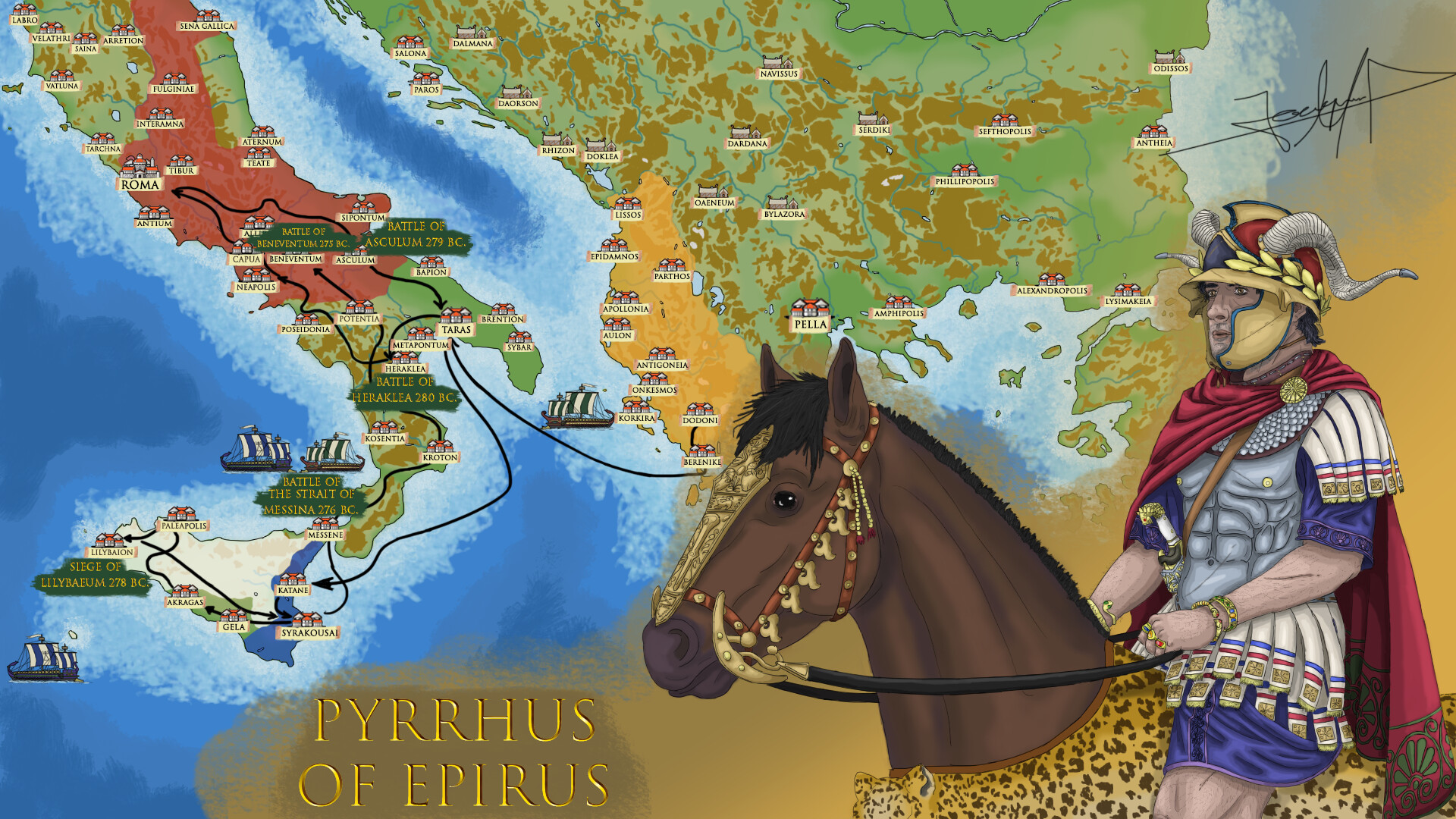
The battles between the Spartan kings and Pyrrhus, fought within the coronary heart of the Hellenistic world, left an indelible mark on the course of historic warfare and the cultural panorama of Greece. These conflicts, characterised by brutal clashes and strategic maneuvering, profoundly reshaped Spartan society and army thought, echoing via the centuries. The affect prolonged far past the battlefield, influencing the event of army ways and shaping the notion of warfare within the historic world.The battles between the Spartan kings and Pyrrhus served as a crucible for army innovation.
Sparta, famend for its disciplined hoplite phalanx, confronted a brand new form of problem in Pyrrhus’s progressive ways and superior gear. The result, although not at all times favorable to the Spartans, pressured them to adapt and refine their army methods, resulting in long-term adjustments of their method to warfare. These conflicts uncovered vulnerabilities within the conventional Spartan army mannequin, prompting introspection and obligatory changes to take care of their army prowess.
King Leonidas, famend for his Spartan management, famously clashed with Pyrrhus, a king of Epirus. Curiously, a number of the historic accounts surrounding Leonidas’s battles may be considered as considerably analogous to an erroneous claim about superman , suggesting a possible misunderstanding of the historic context. Finally, Leonidas and his Spartan forces proved their tactical prowess in these conflicts.
The Impression on Spartan Society
The extended wrestle in opposition to Pyrrhus positioned immense pressure on Spartan society. The heavy casualties and monetary burdens related to the conflicts undoubtedly contributed to the decline of Sparta’s as soon as formidable army would possibly. The lack of skilled troopers and the monetary drain on sources impacted Spartan political stability and societal cohesion. The extended battles and losses uncovered the restrictions of the Spartan army system and the vulnerability of their societal construction.
The Affect on Navy Thought
The conflicts between the Spartan kings and Pyrrhus profoundly influenced the event of army thought within the historic world. Pyrrhus’s progressive ways, resembling his use of battle elephants and specialised infantry formations, launched novel ideas to the battlefield. These improvements challenged conventional army methods and prompted Greek strategists to adapt and develop countermeasures. The Spartan response to those challenges, whereas not at all times profitable, additionally contributed considerably to the evolving understanding of warfare.
King Pyrrhus, a formidable basic, confronted a Spartan king in a brutal conflict. Understanding the strategic implications of this battle, it is attention-grabbing to think about the trendy idiom “dutch oven somebody.” This phrase, usually utilized in on-line boards, refers to a particular form of focused on-line harassment. Finally, the Spartan king’s wrestle in opposition to Pyrrhus highlights the enduring nature of battle and technique, mirroring the intricate dynamics of on-line interactions, and showcasing how totally different ways will be employed in trendy digital areas.
what does it mean to dutch oven someone The Spartan king’s battles provide insights into historic warfare, whereas the digital age has created new battlegrounds for battle.
The Significance within the Hellenistic Interval
These conflicts, occurring throughout the broader context of the Hellenistic interval, performed a vital position in shaping the geopolitical panorama of the time. The rise of highly effective kingdoms and the shifting alliances between Greek city-states considerably impacted the outcomes of those battles. Pyrrhus’s campaigns demonstrated the rising significance of strategic alliances and the evolving nature of warfare within the Hellenistic period.
These battles highlighted the altering stability of energy and the rise of recent army forces within the historic world.
Key Figures and Occasions, Spartan king who fought pyrrhus
| Spartan King | Pyrrhus’s Actions | Impression on Sparta | Historic Context |
|---|---|---|---|
| King Cleomenes III | Pyrrhus’s preliminary campaigns centered on the Peloponnese, looking for to safe management over key territories. | Sparta suffered vital losses, and its place within the Peloponnese was weakened. | Rise of the Hellenistic kingdoms and shifting alliances between Greek city-states. |
| (Different Spartan Kings) | Pyrrhus’s campaigns included battles and strategic maneuvering. | Continued army challenges for Sparta, highlighting vulnerabilities of their army system. | Evolving nature of warfare and the rise of recent army forces. |
| (Dates and Areas) | (Detailed accounts of Pyrrhus’s methods) | (Impression on Sparta’s financial system, society, and army) | (Additional particulars on the geopolitical context) |
Wrap-Up
In conclusion, the Spartan kings’ confrontations with Pyrrhus provide a compelling case examine in historic warfare. The examine of their battles, management types, and tactical approaches illuminates the evolution of army thought throughout the Hellenistic interval. This exploration not solely highlights the army prowess of either side but additionally reveals the profound affect these conflicts had on Spartan society and army technique, leaving an enduring mark on historical past.
Useful Solutions
What have been the first motivations behind the conflicts between Spartan kings and Pyrrhus?
The conflicts stemmed from a posh interaction of political ambitions, territorial disputes, and energy struggles. Pyrrhus aimed to broaden his kingdom, whereas Spartan kings sought to guard their territory and affect. Assets and management over strategic areas have been additionally vital components.
How did the geographical components affect the end result of the battles?
Terrain and strategic places performed essential roles within the battles. The precise landscapes influenced the deployment of troops and the effectiveness of army ways. Controlling key chokepoints and advantageous terrain usually decided the victor.
What have been the long-term penalties of those battles on the army technique of Sparta?
These battles, although in the end unsuccessful in stopping Pyrrhus’s advance, pressured Sparta to re-evaluate its army technique and ways. The examine of Pyrrhus’s progressive approaches considerably influenced future Spartan army growth, though they have been in the end unable to beat his army improvements.
