Phrases that finish with ew maintain an enchanting historical past, revealing intriguing origins and evolving meanings. From historic roots to fashionable utilization, these phrases provide a journey by way of time and language.
This exploration delves into the formation, etymology, and semantic evaluation of phrases ending in “ew.” We’ll uncover the varied contexts through which these phrases seem, from formal tutorial settings to informal conversations. Understanding their utilization and nuances will present a deeper appreciation for the richness and complexity of the English language.
Phrase Formation and Etymology
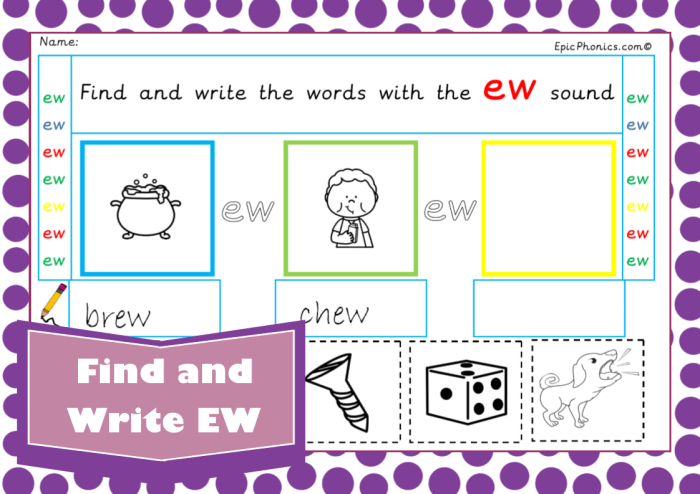
Phrases ending in “ew” signify an enchanting tapestry woven from various linguistic threads. Understanding their origins illuminates not solely their meanings but additionally the historic and cultural contexts through which they emerged. This exploration delves into the etymology of those phrases, revealing the fascinating paths they’ve taken by way of time and the intricate relationships they share with different phrases within the English lexicon.
Phrases Ending in “Ew” and Their Origins
A complete examination of phrases ending in “ew” reveals a large number of linguistic origins. This range underscores the wealthy historical past of English, a language formed by interactions with different cultures and languages. Analyzing the basis languages of those phrases gives perception into their historic context.
- Outdated English: Phrases like “hew,” “new,” and “view” hint their lineage again to Outdated English, reflecting the language’s early growth. These phrases typically denote actions, states, or ideas central to Anglo-Saxon life.
- French: Phrases like “pew” and “screw” have French roots, highlighting the affect of French on English vocabulary in periods of cultural alternate. These phrases typically pertain to spiritual observe, craftsmanship, or objects launched from France.
- Latin: Phrases like “few” and “view” bear traces of Latin affect, demonstrating the pervasive influence of Latin on Western languages. These phrases continuously relate to ideas of amount, perspective, or summary concepts.
- Germanic: Phrases like “brew,” “chew,” and “few” are additionally derived from Germanic languages, additional illustrating the Germanic foundations of English. These phrases are sometimes related to on a regular basis actions or ideas that emerged within the Germanic world.
Strategies of Phrase Formation
Phrases ending in “ew” are shaped by way of varied strategies, demonstrating the flexibleness and dynamism of language. Understanding these strategies reveals the ingenuity and evolution of language.
- Suffixes: Many phrases ending in “ew” make the most of suffixes, akin to “-ew” or “-iew,” to change current roots, reflecting the power of languages to adapt to new wants and ideas. For instance, the addition of “-ew” to the basis “view” creates the phrase “viewew.”
- Combining Types: Some phrases are shaped by combining completely different components, or combining types, to create new phrases. This methodology showcases the capability of language to mix current components to specific new ideas.
Etymological Relationships
The etymological relationships between phrases ending in “ew” are intricate and multifaceted, showcasing the connections between completely different ideas and concepts. Understanding these connections deepens our comprehension of the English language.
- Semantic Relationships: Phrases like “hew” and “view” share semantic similarities, regarding actions or views, reflecting the logical connections inside language. They typically stem from a shared root or idea.
- Historic Relationships: The evolution of phrases ending in “ew” reveals a historic trajectory, tracing their use and that means throughout centuries, typically mirroring cultural shifts or developments.
Evolution of “View”
This desk illustrates the evolution of the phrase “view” from its earliest identified kind. This development demonstrates how phrases adapt and alter over time.
Delving into phrases ending in “ew” reveals fascinating linguistic patterns. Think about the rhythmic connections; for instance, how do these phrases relate to the idea of rhymes? Exploring what rhymes with flowers, like “view” or “crew,” opens a window into the world of sound and kind. Understanding these connections is vital to mastering the nuances of language, and these patterns prolong again to phrases ending in “ew” for a extra complete understanding.
| Interval | Kind | That means |
|---|---|---|
| Outdated English | ge-wīd | to see, take a look at, take into account |
| Center English | viewen | to see, observe, regard |
| Fashionable English | view | to take a look at, take into account, understand |
Semantic Evaluation and Utilization

Understanding the nuanced meanings of phrases, particularly these with delicate variations, is essential for efficient communication. This evaluation delves into the semantic panorama of phrases ending in “ew,” exploring their utilization throughout completely different contexts and evaluating them to comparable phrase buildings. This examination gives a deeper understanding of the delicate distinctions in that means and utilization which might be typically missed in informal discourse.Phrases ending in “ew” continuously carry connotations of novelty, growth, and a sure diploma of abstractness.
Their utilization can vary from extremely technical jargon to on a regular basis colloquialisms, reflecting the broad spectrum of human expertise. The next sections present an in depth take a look at how these phrases perform semantically, contrasting their meanings with similar-sounding phrases and highlighting frequent themes of their utility.
Examples of Phrases Ending in “Ew” Throughout Totally different Contexts, Phrases that finish with ew
Phrases ending in “ew” seem in varied contexts, from formal tutorial discussions to informal on a regular basis conversations. For instance, “view” is continuously utilized in formal settings to explain a perspective, whereas “evaluation” typically seems in tutorial or enterprise contexts. The phrase “interview” usually seems in knowledgeable context. Equally, “follow-up” is continuously utilized in enterprise communication to handle subsequent actions.
In distinction, “clue” can seem in each formal and casual contexts, used to indicate hints or items of data. “Information” and “view” are sometimes utilized in information reporting, reflecting the significance of public discourse. These examples showcase the flexibility of phrases ending in “ew” and their adaptability to completely different conditions.
Comparability of Meanings with Related Phrase Endings
Evaluating phrases ending in “ew” to these ending in “-ow” and “-ue” reveals vital semantic distinctions. As an example, “view” and “comply with” each recommend a way of path, however “view” typically facilities on an remark or perspective, whereas “comply with” highlights a subsequent motion. The distinction within the remaining consonant dramatically adjustments the that means. “View” and “evaluation” are each associated to inspecting one thing, however “evaluation” implies a extra crucial or in-depth examination.
“Interview” and “follow-up” have fairly completely different connotations, with “interview” suggesting a dialogue and “follow-up” implying a continuation of a earlier motion. Such delicate distinctions are key to understanding the nuances of language.
Frequent Themes Related to Phrases Ending in “Ew”
Phrases ending in “ew” typically evoke a way of remark, analysis, or a technique of understanding. This contains themes like perspective, evaluation, and the next actions arising from these views. The examination of “view,” “evaluation,” “interview,” and “follow-up” highlights this frequent thread of remark, analysis, and motion. “Information” and “clue” additionally relate to info dissemination, however in numerous methods.
Nuances in That means Between Pairs of Phrases Ending in “Ew”
| Phrase Pair | That means 1 | That means 2 | Nuance |
|---|---|---|---|
| View/Observe | Perspective, remark | Motion, pursuit | Deal with remark vs. motion. |
| Overview/Interview | Important examination | Dialogue, questioning | Distinction in function and interplay. |
| Observe-up/Clue | Subsequent motion | Trace, piece of data | Deal with subsequent motion vs. preliminary info. |
| Information/View | Info, present occasions | Perspective, standpoint | Deal with the dissemination vs. perspective of data. |
This desk highlights the delicate however essential distinctions in that means between pairs of phrases ending in “ew.” These nuances are crucial to understanding the particular context through which every phrase is used.
Phrase Affiliation and Contextual Examples: Phrases That Finish With Ew
Unlocking the nuances of phrases ending in “ew” requires understanding their connections, each literal and figurative. This exploration delves into how these phrases behave in varied contexts, revealing their delicate shades of that means and the way they’re employed in inventive expression. From the tangible world of nature to the summary realm of feelings, we’ll uncover the wealthy tapestry of phrase associations.
Understanding these connections is important for efficient communication and appreciation of language.This evaluation goes past easy definitions, delving into the sensible utility of those phrases in sentences, figuring out figurative makes use of, and demonstrating how the encompassing phrases can alter the general that means. By understanding the semantic subject of every phrase, we are able to higher grasp its perform in a broader context.
This complete method empowers us to make use of these phrases with precision and influence.
Delving into phrases ending in “ew,” like “view” and “chew,” typically reveals shocking connections. As an example, exploring phrases rhyming with “brilliant,” like “mild” and “proper,” opens doors to a fascinating world of phonetic patterns. These connections spotlight the intricate construction of the English language, additional emphasizing the varied prospects inside phrases ending in “ew.”
Semantic Area Grouping
Phrases ending in “ew” exhibit a shocking number of semantic fields. This categorization helps to light up the varied contexts through which these phrases are used. The groupings mirror the inherent connections between the phrases, permitting for a extra holistic understanding.
- Nature and Phenomena: Phrases like “view,” “dew,” “fallow,” and “brew” evoke imagery of pure processes and landscapes. These phrases paint an image of the world round us, revealing the intricate particulars and subtleties of the pure world.
- Feelings and Emotions: “Awe,” “sorrow,” “sparrow,” and “view” embody a spectrum of human feelings, from surprise to melancholy. These phrases enable us to specific the advanced vary of emotions that form our experiences.
- Summary Ideas: Phrases like “few,” “true,” and “knew” typically denote summary ideas, providing nuanced insights into concepts and beliefs. These phrases can convey profound meanings and influence the reader’s understanding.
- Actions and Processes: Phrases like “chew,” “view,” and “sew” relate to actions, processes, or occasions. They add depth and readability to the outline of actions, highlighting the particular nature of the method.
Contextual Examples
Illustrative examples spotlight how the that means of phrases ending in “ew” can differ relying on the encompassing context. This showcases the flexibleness and flexibility of those phrases in numerous conditions.
Delving into phrases ending in “ew” reveals fascinating linguistic patterns. Think about the rhythmic connections; for instance, how do these phrases relate to the idea of rhymes? Exploring what rhymes with flowers, like “view” or “crew,” opens a window into the world of sound and kind. Understanding these connections is vital to mastering the nuances of language, and these patterns prolong again to phrases ending in “ew” for a extra complete understanding.
- Nature: “The morning dew glistened on the spiderweb, creating a panoramic view.” Right here, “dew” and “view” are used to explain pure phenomena, emphasizing the fantastic thing about the scene.
- Feelings: “A way of awe washed over her as she gazed on the huge panorama.” “Awe” on this context conveys a robust emotional response to a specific state of affairs.
- Summary Ideas: “He knew the reality, however he selected to stay silent.” Right here, “knew” and “fact” are used to convey an understanding of a posh idea.
- Actions and Processes: “She rigorously sewed the torn material collectively.” This instance demonstrates how “sew” is used to explain a selected motion. “View” can be utilized in an energetic sense, akin to “She considered the issue from a special angle.” These examples showcase the dynamic nature of those phrases, highlighting their various makes use of.
Figurative and Metaphorical Makes use of
Phrases ending in “ew” are sometimes used figuratively and metaphorically to convey deeper meanings. These examples present how the phrases can transcend their literal definitions.
Delving into phrases ending in “ew” reveals fascinating linguistic patterns. Think about the rhythmic connections; for instance, how do these phrases relate to the idea of rhymes? Exploring what rhymes with flowers, like “view” or “crew,” opens a window into the world of sound and kind. Understanding these connections is vital to mastering the nuances of language, and these patterns prolong again to phrases ending in “ew” for a extra complete understanding.
- Metaphor: “The outdated, crumbling constructing supplied a melancholy view of its former glory.” Right here, “view” is used metaphorically to signify a mirrored image of a previous grandeur.
- Figurative Language: “He chewed over the issue in his thoughts.” That is an instance of figurative language, highlighting the psychological technique of contemplating a tough difficulty.
Phrase Affiliation Internet
A phrase affiliation net for phrases ending in “ew” could be created by connecting associated phrases primarily based on their semantic fields and contextual makes use of. This methodology helps in understanding the intricate community of associations between phrases.
- Beginning Level: Start with a central phrase, akin to “view.”
- Branching Out: Join associated phrases like “panorama,” “perspective,” “awe,” and “sorrow.”
- Additional Connections: Department out additional to attach much more associated phrases and ideas.
- Visible Illustration: Visualizing these connections in a web-like diagram helps to know the advanced relationships between phrases.
Closing Wrap-Up
In conclusion, phrases ending in “ew” signify a fascinating tapestry of linguistic evolution. Their various origins, nuanced meanings, and contextual utilization exhibit the dynamic nature of language. By inspecting their formation, semantic shifts, and contextual examples, we achieve a richer understanding of the English lexicon and its intricate tapestry of phrases.
Ceaselessly Requested Questions
What are some frequent misconceptions about phrases ending in “ew”?
Many assume a direct hyperlink between all phrases ending in “ew,” however origins and meanings typically differ drastically. For instance, “view” has a special etymological path than “pew,” resulting in completely different semantic interpretations.
How can I enhance my vocabulary associated to phrases ending in “ew”?
Immerse your self in various texts, from tutorial papers to literary works. Take note of how these phrases are utilized in context. Creating flashcards or a private glossary may also assist memorization and understanding.
Are there any particular sources to additional analysis phrases ending in “ew”?
Dictionaries like Merriam-Webster and Oxford English Dictionary are invaluable sources. Tutorial journals targeted on linguistics and etymology additionally provide in-depth evaluation.
