
Is air a homogeneous combination? This basic query delves into the intricate composition of the very air we breathe. Understanding the reply gives vital insights into the world round us, from climate patterns to human well being. This exploration will unravel the complexities behind this seemingly easy question.
Air, composed primarily of nitrogen and oxygen, is a posh mix of gases. Whereas seemingly uniform, the molecular make-up of air reveals an interesting interaction of parts and their interactions. The reply as to whether it is a homogeneous combination lies within the distribution and habits of those parts.
Air, the invisible substance that surrounds us, performs an important function in our each day lives. However is it merely a single substance, or one thing extra complicated? To know the properties of air, we have to delve into the idea of homogeneous mixtures. This text will discover the composition of air, defining what makes it a homogeneous combination and explaining the scientific rules behind it.

What’s a Homogeneous Combination?
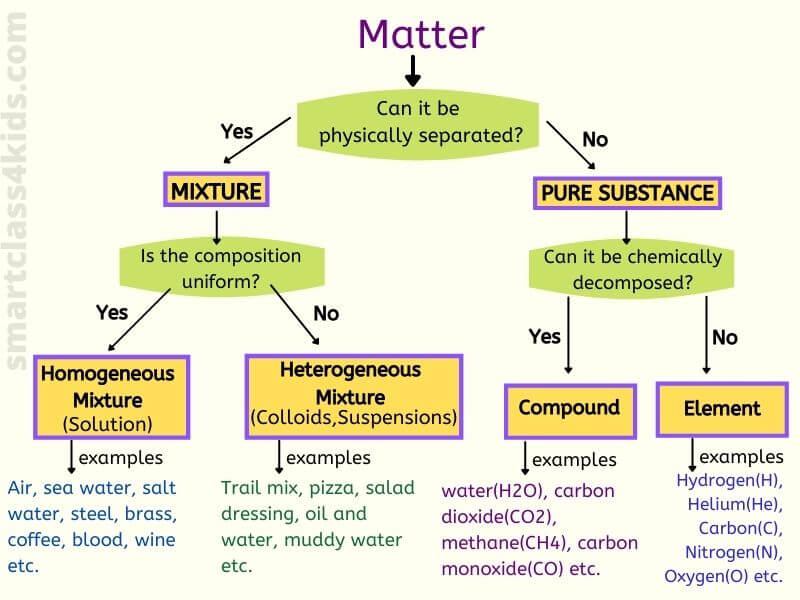
A homogeneous combination is a mix of two or extra substances the place the parts are uniformly distributed. Which means that the combination has a constant composition all through. Think about a superbly combined glass of lemonade. The sugar, lemon juice, and water are all completely mixed, and you’ll’t visually distinguish one element from one other.
The Composition of Air
Air is not a single substance; it is a complicated combination of gases. The first parts are nitrogen (roughly 78%), oxygen (roughly 21%), and hint quantities of different gases, together with argon, carbon dioxide, and neon. These gases are continually transferring and colliding, however their distribution stays remarkably uniform, giving air its homogeneous nature.
Understanding the Uniformity of Air
The uniformity of air is a consequence of the kinetic molecular principle. Gasoline particles are in fixed movement, colliding with one another and the container partitions. This fixed movement ensures that the gasoline particles are evenly dispersed all through the house they occupy. The relative proportions of every gasoline element in air stay constant throughout any given quantity, a key attribute of a homogeneous combination.
Whereas air is a seemingly easy substance, understanding if it is a homogeneous combination requires a more in-depth look. Its key parts, like nitrogen and oxygen, are uniformly distributed, making it a homogeneous combination. This contrasts with different mixtures, the place parts aren’t evenly dispersed. Nonetheless, understanding this idea is essentially completely different from the query of what it means to “slime your homeboy,” a phrase with a singular slang which means, which you’ll discover right here: what does it mean to slime your homeboy.
Finally, the uniform distribution of gases in air, versus different mixtures, is the defining attribute of its homogeneity.
Air as a Resolution
Whereas typically described as a mix, air may also be thought of an answer. Gases, just like the parts of air, can dissolve into one another. The method of 1 gasoline dissolving into one other is pushed by the intermolecular forces between the gasoline particles, in addition to the general stress and temperature situations. In air, these forces guarantee a uniform distribution of gasoline parts, solidifying its standing as a homogeneous resolution.
Examples of Homogeneous Mixtures: Is Air A Homogeneous Combination
Past air, many different widespread substances are homogeneous mixtures. Saltwater, brass (a mix of copper and zinc), and even some alloys are prime examples. These mixtures preserve a constant composition all through, not like heterogeneous mixtures like sand and water, the place the parts are simply distinguishable.
Variations Between Homogeneous and Heterogeneous Mixtures
A key distinction between homogeneous and heterogeneous mixtures lies within the uniformity of their composition. Homogeneous mixtures, like air, have a constant make-up all through, whereas heterogeneous mixtures, resembling a salad, have visibly completely different parts. The distribution of parts shouldn’t be uniform in a heterogeneous combination.
Air, a significant element of our environment, is certainly a homogeneous combination. Its seemingly uniform composition belies the intricate mix of gases, together with nitrogen and oxygen. Delving into the huge lexicon of phrases, one would possibly come upon an interesting checklist of six-letter phrases starting with ‘v’, resembling “vacant” or “valued”. This comprehensive list showcases the wealthy tapestry of English vocabulary.
Finally, air’s homogeneous nature arises from the even distribution of its constituent gases, an important side of our planet’s environment.
Components Affecting Homogeneous Mixtures
A number of elements affect the homogeneity of a mix. Temperature, stress, and the character of the interacting substances all play a job in figuring out the uniformity of distribution. For example, growing the temperature can generally disrupt the homogeneity of an answer, whereas growing the stress can have the alternative impact.
Conclusion
Air, a significant element of our surroundings, is a homogeneous combination of gases. The uniform distribution of its parts, stemming from the kinetic molecular principle and the character of gases, makes it an important instance of any such combination. Understanding the properties of homogeneous mixtures like air is crucial to comprehending the habits of varied substances round us.
Whereas air seems uniform, its composition is an interesting instance of a homogeneous combination. Understanding this idea is essential for varied scientific purposes, together with, for instance, fixing crossword puzzles. An amazing useful resource for locating essentially the most comparable crossword clue for this subject is out there right here: most similar crossword clue. Finally, air’s homogeneity, regardless of its complicated parts, is a key idea in chemistry and physics.
Additional Exploration
[See also: The Science Behind Weather Patterns]
[See also: Understanding Different Types of Mixtures]
Air, an important element of our environment, is undeniably a homogeneous combination. Its seemingly uniform composition, a mix of varied gases like nitrogen and oxygen, makes it a first-rate instance of this. Understanding the intricate nature of this combination is vital to comprehending the complexities of the world round us. This results in contemplating associated phrases, just like the six letter phrase beginning with ‘r’ that may describe the parts of such a mix.
For instance, researching six letter word starts with r could be a useful train in exploring the properties of air additional. Finally, air’s standing as a homogeneous combination is plain.
[Image: A diagram illustrating the different gas components in air]
This text gives a complete understanding of air as a homogeneous combination. You probably have any questions or feedback, be happy to share them under. Do not hesitate to share this text with others who would possibly discover it attention-grabbing or useful.
Air, a seemingly easy substance, is definitely a posh combination of gases. Figuring out if it is a homogeneous combination hinges on the constant distribution of its parts. The entire sudden, the seemingly easy query turns into extra nuanced when contemplating the various concentrations of nitrogen, oxygen, and hint parts. Finally, air’s homogeneity is a matter of perspective, relying on the dimensions of remark.
All of the sudden or all of a sudden , the reply would possibly shock you, given the dynamic nature of its composition. This variability impacts how we classify air as a homogeneous combination.
Able to delve deeper into the world of mixtures? Discover extra associated articles on our web site. [See also: Further Resources on Mixtures and Solutions]
In conclusion, whereas air seems uniform, its true nature as a homogeneous combination is extra nuanced than meets the attention. The constant distribution of its parts, whereas a key side, shouldn’t be the only real determinant. Additional investigation into the properties and behaviors of the gases comprising air affords a extra complete understanding of its general traits.
Normal Inquiries
What are the principle parts of air?
Air is primarily composed of nitrogen (roughly 78%) and oxygen (roughly 21%). Hint quantities of different gases, resembling argon, carbon dioxide, and neon, additionally contribute to its composition.
How does air stress have an effect on its properties?
Air stress considerably impacts the density and habits of air. Increased altitudes, with decrease stress, lead to much less dense air, impacting atmospheric phenomena and human physiology.
Can the composition of air range?
Sure, the composition of air can range regionally attributable to elements like air pollution, altitude, and native climate patterns. This variability is essential for understanding localized environmental situations.
Does the motion of air have an effect on its homogeneity?
Air currents and different types of motion could cause localized variations in composition, however on a big scale, air is usually thought of a homogeneous combination.
