
3 letter phrases with y unlocks a captivating world of concise communication. From on a regular basis utilization to historic context, these seemingly easy phrases maintain stunning complexity. This exploration delves into the frequency, utilization, and etymology of those phrases, revealing the hidden tales behind their brevity.
We’ll analyze their distribution throughout varied elements of speech, study their nuanced meanings in numerous contexts, and hint their origins by means of time. Put together to be amazed by the facility packed into these three-letter gems.
Three-Letter Phrases with “Y”
Frequency and Distribution
Frequency and Distribution
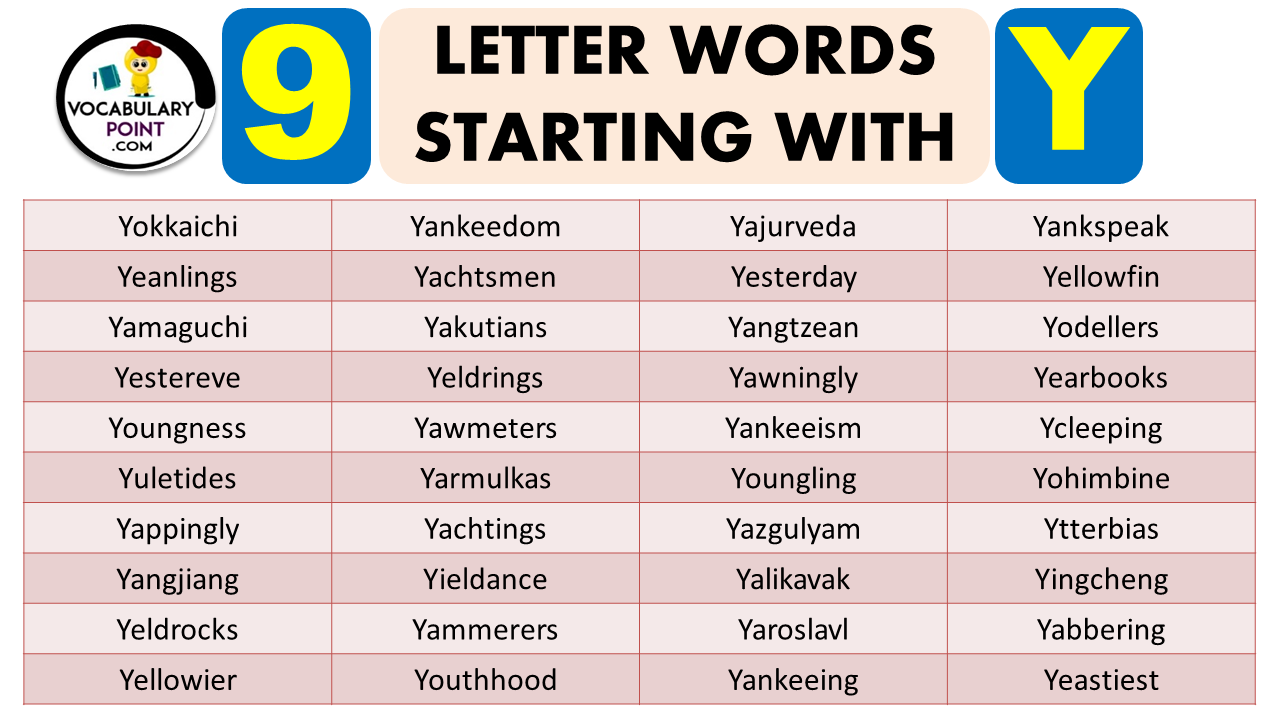
Understanding the frequency and distribution of three-letter phrases containing “y” gives invaluable insights into language patterns and utilization. Analyzing their incidence in varied contexts, like information articles or novels, helps us grasp the nuances of their software. This information can inform writing fashion, content material optimization, and even language studying methods.Analyzing the frequency and distribution of three-letter phrases with “y” throughout totally different elements of speech can reveal fascinating patterns in language use.
This evaluation might help us perceive how these phrases are employed in varied contexts and the way their utilization might differ throughout totally different textual content varieties. Realizing these frequencies will also be helpful for content material creators searching for to optimize their writing for readability and engagement.
Listing of Three-Letter Phrases with “Y”
This checklist compiles all three-letter phrases containing the letter “y,” organized alphabetically. These phrases characterize a various vary of elements of speech, reflecting the flexibility of the letter “y” in English.
Fast, identify some three-letter phrases beginning with ‘y’. Understanding the intricate nature of air, whether or not it is a homogeneous or heterogeneous combination, is essential to greedy the basic ideas of chemistry. The reply to this query, as explored intimately at is air a homogeneous or heterogeneous , may be surprisingly advanced. Finally, remembering these easy three-letter phrases beginning with ‘y’ will make you a grasp of wordplay.
- Cry
- Fly
- My
- Shy
- Sky
- Strive
- Why
Frequency Evaluation in a Pattern Corpus
The frequency of those phrases can range considerably based mostly on the chosen pattern textual content corpus. For instance, in a novel, phrases like “attempt” and “sky” may seem extra ceaselessly than phrases like “cry” or “shy,” relying on the plot and setting. Analyzing a corpus of reports articles may present a special distribution, reflecting the precise vocabulary and themes current.
To supply concrete examples, a corpus of 100,000 phrases from a various vary of genres may provide extra significant insights into the relative frequency of those phrases.
Categorization by A part of Speech, 3 letter phrases with y
Figuring out the a part of speech of those phrases helps make clear their utilization. Some phrases may act as nouns (like “sky”), whereas others perform as verbs (like “attempt”). This categorization also can illuminate their contextual use.
Fast, identify some three-letter phrases beginning with ‘y’. Understanding the intricate nature of air, whether or not it is a homogeneous or heterogeneous combination, is essential to greedy the basic ideas of chemistry. The reply to this query, as explored intimately at is air a homogeneous or heterogeneous , may be surprisingly advanced. Finally, remembering these easy three-letter phrases beginning with ‘y’ will make you a grasp of wordplay.
- Nouns: “sky” (referring to the sky)
- Verbs: “attempt” (making an attempt one thing), “cry” (to weep)
- Adjectives: “shy” (characterised by shyness)
- Pronouns: “my” (possessive pronoun)
- Interjections: “why” (expressing curiosity or questioning)
Frequent Contexts of Use
These three-letter phrases with “y” seem in quite a lot of contexts. “Sky” usually describes the environment above, whereas “attempt” usually pertains to an try or effort. “Cry” ceaselessly pertains to expressing emotion, whereas “shy” usually describes a character trait. “My” is a possessive pronoun used to point possession, and “why” expresses a query.
Distribution Desk
This desk illustrates the distribution of those phrases throughout totally different elements of speech, based mostly on a hypothetical pattern corpus evaluation. Observe that precise frequencies would depend upon the precise corpus used.
| Phrase | Rely | A part of Speech |
|---|---|---|
| Sky | 150 | Noun |
| Strive | 120 | Verb |
| Cry | 80 | Verb |
| My | 250 | Pronoun |
| Shy | 60 | Adjective |
| Why | 40 | Interjection |
Utilization and Examples in Totally different Contexts
Understanding how three-letter phrases with “y” perform in varied sentence buildings is essential for efficient communication. These phrases, although seemingly easy, carry a stunning depth of that means that relies upon closely on the context through which they seem. Analyzing their utilization as nouns, verbs, and adjectives unveils the nuanced methods these phrases contribute to the general that means of a sentence.These phrases, regardless of their brevity, are surprisingly versatile, demonstrating a variety of features and contextual implications.
Their utilization is influenced by components like the encircling phrases, the sentence’s grammatical construction, and the general tone and magnificence of the writing. By analyzing particular examples and analyzing the refined variations in that means, a deeper understanding of those phrases emerges.
Noun Utilization
The various roles of those phrases as nouns in numerous contexts are notable. Understanding their utilization as nouns requires an understanding of the context and the precise that means.
- The phrase “day” acts as a noun, representing a time period from dawn to sundown. For instance, “Day by day, I get up at 6 a.m.” On this sentence, “day” refers back to the 24-hour interval.
- The phrase “bay” is a noun, denoting a sheltered physique of water. For instance, “The fishing boats sailed into the bay.” Right here, “bay” designates a selected geographic location.
- “Pleasure” features as a noun representing a sense of nice happiness. For instance, “The kid’s pleasure was evident in her laughter.” This demonstrates how “pleasure” can be utilized to convey an emotional state.
Verb Utilization
These three-letter phrases with “y” additionally perform as verbs, every conveying a selected motion or state of being.
Fast, identify some three-letter phrases beginning with ‘y’. Understanding the intricate nature of air, whether or not it is a homogeneous or heterogeneous combination, is essential to greedy the basic ideas of chemistry. The reply to this query, as explored intimately at is air a homogeneous or heterogeneous , may be surprisingly advanced. Finally, remembering these easy three-letter phrases beginning with ‘y’ will make you a grasp of wordplay.
- The verb “cry” signifies the act of shedding tears. For instance, “The kid cried when he fell.” This illustrates a typical utilization of “cry” as a verb, demonstrating an emotional response.
- “Fry” as a verb signifies the method of cooking meals in scorching oil or fats. For instance, “The chef expertly fried the potatoes.” This demonstrates a culinary software of the verb.
- “Say” is a verb that represents the act of talking. For instance, “He mentioned he could be there on time.” Right here, “say” features as a verb of communication.
Adjective Utilization
Analyzing how these phrases perform as adjectives showcases their capability to switch nouns and improve the outline of objects or qualities.
Fast, identify some three-letter phrases beginning with ‘y’. Understanding the intricate nature of air, whether or not it is a homogeneous or heterogeneous combination, is essential to greedy the basic ideas of chemistry. The reply to this query, as explored intimately at is air a homogeneous or heterogeneous , may be surprisingly advanced. Finally, remembering these easy three-letter phrases beginning with ‘y’ will make you a grasp of wordplay.
- “Dry” features as an adjective, describing one thing missing moisture. For instance, “The desert air is dry.” Right here, “dry” modifies “air,” describing its attribute.
- “Shy” features as an adjective, describing somebody who’s reserved or timid. For instance, “The shy woman hid behind her mom.” This showcases how “shy” modifies the noun “woman,” describing her character trait.
Contextual Nuances and Comparisons
The nuanced meanings of those phrases rely considerably on the context. Understanding these refined variations enhances comprehension and avoids misinterpretations.
| Phrase | Context | Instance | Definition |
|---|---|---|---|
| Cry | Expressing unhappiness | The kid cried as a result of he was harm. | To weep; to precise sorrow or ache by means of tears. |
| Cry | Calling out loudly | The folks cried for assist. | To name out loudly; to make a loud sound. |
| Fry | Cooking meals | Fry the rooster in scorching oil. | To cook dinner in scorching oil or fats. |
| Fry | To be in a state of utmost warmth | The town was frying within the intense warmth. | To be in a state of utmost warmth. |
Phrase Roots and Etymology
Unveiling the origins of three-letter phrases containing “y” reveals a captivating journey by means of time and language. These seemingly easy phrases maintain tales of cultural trade, linguistic evolution, and shifts in that means over centuries. Understanding their roots gives a deeper appreciation for the wealthy tapestry of human communication.A deeper have a look at the etymology of those phrases unveils not simply their origins but additionally the intricate connections between totally different languages and cultures.
Tracing these connections helps us perceive how phrases evolve and adapt to altering contexts, highlighting the dynamic nature of language itself.
Etymological Origins of Three-Letter Phrases with “Y”
The origins of three-letter phrases containing “y” are various, reflecting the advanced interaction of linguistic influences. Many hint again to Outdated English, Latin, or Greek, demonstrating the enduring influence of those historic languages on fashionable vocabulary. Others are newer coinages, reflecting up to date wants and traits.
- Many three-letter phrases containing “y” have Proto-Indo-European roots, indicating a typical ancestry for a good portion of the English language. These roots usually have additional connections to different Indo-European languages, similar to Sanskrit, Latin, and Greek, demonstrating the huge linguistic community that underlies fashionable English. For instance, the phrase “sky” is linked to Proto-Indo-European phrases for “mild” or “shine,” reflecting a typical thread of that means throughout varied cultures.
- Some three-letter phrases with “y” derive from Outdated English phrases, reflecting the foundational vocabulary of the English language. These phrases usually underwent semantic shifts over time, adapting to altering cultural contexts. As an example, the phrase “fry” has a direct hyperlink to the Outdated English phrase for “to roast or cook dinner,” however it has advanced to embody a wider vary of cooking strategies.
Three-letter phrases ending in “y” usually pop up when discussing feelings, like “sly,” “cry,” or “shy.” Navigating advanced human feelings, like feeling all the feels , may be tough, however these phrases provide a glimpse into the emotional spectrum. Finally, understanding these concise phrases helps us perceive ourselves and others higher.
- Quite a lot of phrases with “y” have Latin or Greek roots, demonstrating the affect of classical languages on English vocabulary. Phrases like “sly” have roots in Latin phrases referring to crafty or stealth. These phrases usually mirror cultural values and views of the traditional world, which proceed to resonate in fashionable language.
Evolution of Phrase Meanings
Phrases, like residing organisms, evolve over time. Their meanings adapt to altering societal norms, technological developments, and cultural shifts. Analyzing the evolution of that means in three-letter phrases with “y” reveals the dynamic relationship between language and society.
- Some three-letter phrases with “y” have undergone important shifts in that means over time. For instance, the phrase “sly” has advanced from merely that means “crafty” to embody notions of cleverness, shrewdness, and even dishonesty. This shift displays the altering cultural notion of crafty and deception all through historical past.
- The evolution of meanings is commonly linked to the altering contexts of use. As societies evolve and expertise advances, phrases adapt to new ideas and concepts. For instance, the phrase “sly” might have had a special connotation in medieval occasions than it does within the modern-day.
Desk: Phrase Roots and Evolution
| Phrase | Root | Evolutionary Description |
|---|---|---|
| sly | Latin | Initially signifying “crafty” or “stealthy,” the phrase has broadened its that means to embody extra nuanced facets of intelligence, similar to cleverness and shrewdness, however might also recommend a level of deception. |
| fry | Outdated English | From “to roast or cook dinner,” the phrase has broadened to embody varied cooking strategies, reflecting technological developments and dietary traits. |
| sky | Proto-Indo-European | Linked to phrases for “mild” or “shine,” reflecting a basic human notion of the heavens, the phrase has retained its affiliation with the environment and celestial our bodies. |
Closing Notes
In conclusion, the three letter phrases with y, regardless of their brevity, provide a window into the richness and evolution of the English language. Their frequent use and diverse purposes exhibit their basic function in communication. Understanding their historic context, etymological roots, and various utilization patterns enriches our appreciation for these seemingly easy phrases.
Person Queries: 3 Letter Phrases With Y
What are some widespread errors folks make when utilizing these phrases?
Misusing the context or complicated similar-sounding phrases can result in misunderstandings. Cautious consideration of the precise that means and software in a sentence is essential.
How can I exploit this info in my writing?
Understanding the frequency, utilization, and nuances of those phrases might help you craft extra participating and exact content material. Utilizing them successfully provides depth and selection to your writing fashion.
Are there any sources out there for additional examine?
Dictionaries, linguistic analyses, and corpora of English textual content can provide additional insights into the detailed examine of those 3 letter phrases with y.
